



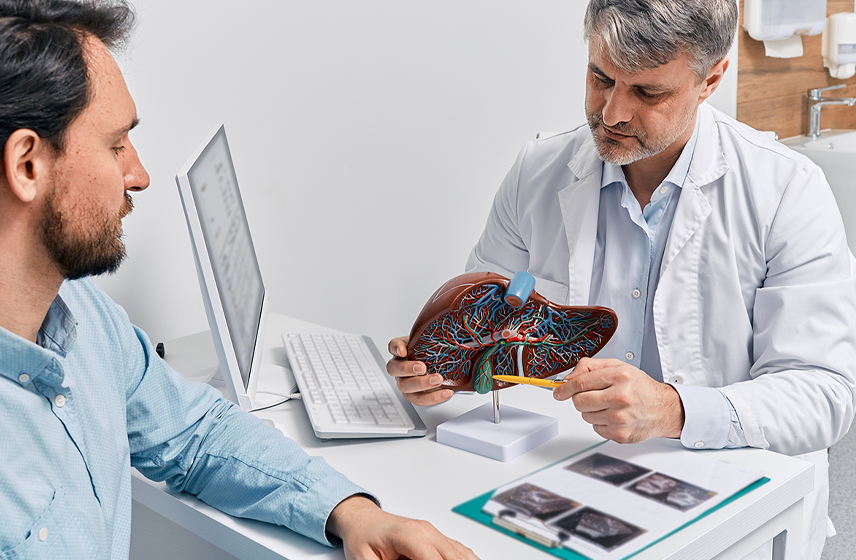
A liver specialist studies how your liver works and where problems begin. You may have questions about your diagnosis, and a specialist will give you clear answers. Liver disease affects each person differently, so your plan should reflect your specific condition, and a specialist builds that plan around your liver disease symptoms.
Diagnosis and Initial Evaluation
Diagnosis starts with a full review of your liver disease symptoms, medical background, and test results.
Information Your Specialist Reviews
A specialist listens carefully to what you describe, and your history helps them identify patterns that point to a cause. Blood tests measure liver enzymes and overall function. Imaging such as an ultrasound or MRI can reveal structural changes. Your specialist weighs all of this information together before drawing conclusions.
Procedures Used for Diagnosis
If abdominal pain points to a deeper issue, the specialist may recommend an upper endoscopy to examine your esophagus, stomach, and upper intestine. Procedures like ERCP or capsule endoscopy can locate problems that standard scans miss, and each tool serves a specific purpose in building a complete picture. Accurate diagnosis shapes every later decision.
Symptoms of Liver Disease
Liver disease can present in many ways, and symptoms often vary depending on the type and stage of your condition. Some people notice changes early, while others have no symptoms until the disease has progressed. Fatigue is one of the most common signs, and it can range from mild tiredness to a persistent lack of energy. You may have symptoms that affect daily life. Jaundice, a yellowing of the skin or eyes, signals that your liver is struggling to process waste, and it often prompts further testing. Abdominal pain or swelling in the upper right side of the body can point to inflammation or fluid buildup around the liver. Nausea, loss of appetite, and unintended weight loss are also signs your specialist will notice. Some symptoms, such as dark urine or pale stools, reflect changes in how your liver handles bile.
Lifestyle Changes and Habits
Lifestyle changes often support your medical treatment directly. Your specialist reviews your daily habits, and they identify which ones place the most stress on your liver. That review shapes the guidance you receive, and these changes work alongside your medication rather than replacing it. If abdominal pain limits your activity, your specialist can adjust your plan so you start exercising safely. Your specialist tracks how your body responds during follow-up visits, and adjustments are made when progress stalls. Common lifestyle changes your specialist may recommend include:
- Reducing excess weight to lower strain on the liver and improve function
- Stopping alcohol consumption to slow further damage to liver tissue
- Limiting processed foods and increasing nutrients that support liver health
- Adding moderate physical activity to support weight management and fat processing
Discuss Liver Disease Symptoms
A liver specialist connects your symptoms, tests, and treatment into one plan. Schedule an appointment today, and bring your recent test results to the visit. Your specialist will review your history while explaining your options. Together you can set clear next steps toward better liver health.
