



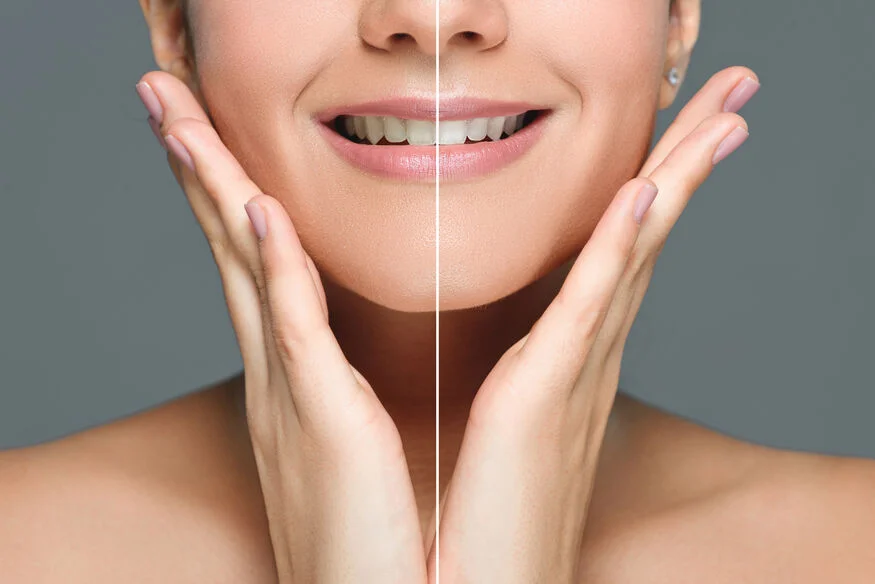
Teeth whitening is a common cosmetic dental treatment. Two primary options are available: at-home whitening products and professional dental treatments. A licensed dentist administers professional whitening in a clinical setting, which offers controlled, precise application. Professional treatments typically use higher concentrations of bleaching agents, and they may also incorporate specialized equipment to improve results. Understanding the differences between these approaches helps determine the right option for a patient’s oral care needs.
What Is Teeth Whitening?
Teeth whitening is a cosmetic dental procedure that lightens the natural color of teeth, and it works by removing stains and discoloration that accumulate on the tooth surface over time. Staining typically results from consuming coffee, tea, wine, or tobacco. The procedure involves applying a bleaching agent, most commonly hydrogen peroxide or carbamide peroxide, to the tooth surface, which breaks down stain molecules to restore a lighter appearance.
What Are At-Home Methods?
At-home whitening options include whitening toothpastes, strips, trays, and LED kits, all of which are typically available at pharmacies. These products typically contain lower concentrations of bleaching agents than professional treatments. Results vary depending on the product and how consistently it is used, so it is beneficial to follow the manufacturer’s instructions carefully. At-home methods are generally effective, but they require daily use over several weeks before noticeable changes appear.
What Are Professional Techniques?
A licensed dentist performs professional teeth whitening using higher-concentration bleaching agents not available over the counter. One method is Zoom teeth whitening. This in-office treatment applies hydrogen peroxide or carbamide peroxide to the teeth and activates it with a specialized light, which accelerates the whitening process. A single Zoom session typically takes about 90 minutes, and it can lighten teeth by several shades. Before any professional treatment begins, the provider conducts an oral health assessment to confirm the patient is a suitable candidate.
Zoom whitening is particularly effective for patients seeking immediate, measurable results, and it is structured to maximize the concentration of the bleaching agent throughout the session. The bleaching gel may be applied in multiple intervals. Because the activating light is reapplied, it maximizes penetration into the tooth enamel. Results can last several months, depending on the patient’s diet and oral hygiene habits.
How Is Professional Treatment Beneficial?
Professional whitening offers several clinical advantages over at-home alternatives, making it a valuable option for patients with significant discoloration or stubborn staining.
- Faster results: Professional whitening can achieve noticeable changes in a single session, as dentists use higher-concentration bleaching agents.
- Customized care: Dentists tailor treatment plans based on the patient’s dental history and whitening goals.
- Professional oversight: Controlled application conditions allow dentists to enhance treatment outcomes while monitoring for adverse effects.
For patients seeking reliable, long-lasting results, professional whitening under clinical supervision is the most effective approach.
Consult a Dentist Today
Both at-home and professional whitening methods can improve the appearance of your smile, but they differ in strength, speed, and safety. At-home options may suit patients with mild staining, while professional treatments suit those seeking faster, more reliable results. If you are exploring your options, schedule a consultation with your dentist. A dentist can evaluate the current condition of your teeth and recommend the most appropriate treatment plan.
