



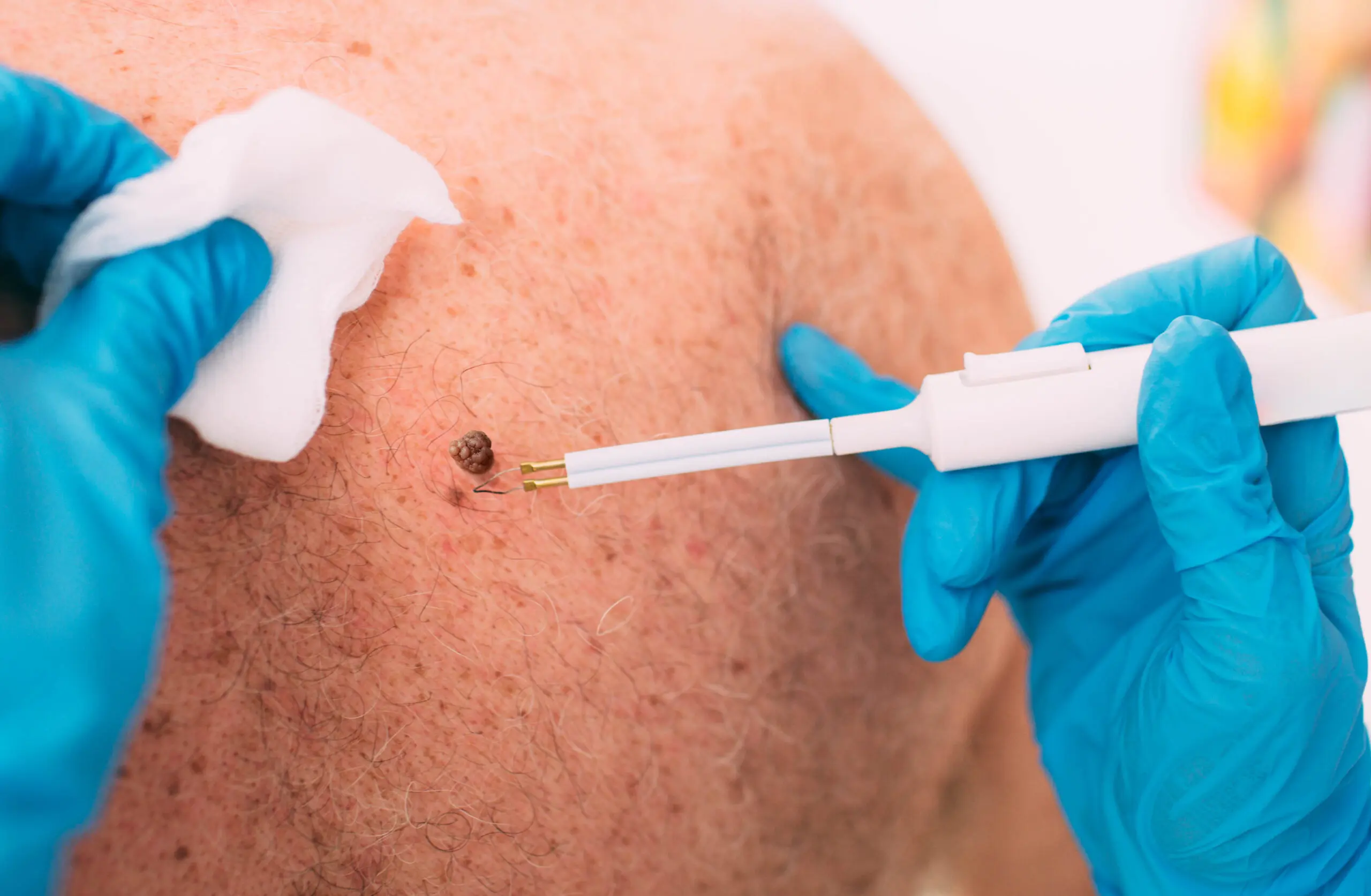
Skin tags are common benign skin growths treated by dermatologists. They affect people of all ages and skin types, and they appear in areas where skin folds or rubs together. While they pose no medical risk, patients can have them removed for cosmetic reasons or because they cause discomfort. Here is more information on what skin tags are, what causes them, and skin tag removal methods:
What Are Skin Tags?
Skin tags, medically known as acrochordons, are small, soft growths that hang from the skin on a thin stalk. They are benign, and dermatologists can typically identify them through visual examination. Although most are a few millimeters in size, larger growths do occur, appearing commonly on the neck, eyelids, armpits, groin, and under the breasts.
These growths do not become cancerous. Skin tag removal is a straightforward outpatient procedure, and dermatologists perform it with minimal risk. While a biopsy is not normally necessary, any unusual or rapidly changing skin growth warrants a professional evaluation to rule out other conditions.
What Causes Them?
Skin tags form when collagen and blood vessels become trapped inside thickened skin, and friction is a primary factor. Repeated rubbing of skin against skin or clothing encourages their development. Certain factors increase the likelihood of developing skin tags. Obesity, type 2 diabetes, and hormonal changes during pregnancy are all associated with a higher occurrence. A genetic predisposition may also play a role, as skin tags sometimes run in families.
What Is Skin Tag Removal?
Skin tag removal is a medical procedure in which a dermatologist eliminates a skin tag using one of several techniques. The process is typically quick, and it requires little to no recovery time because it is performed in a controlled clinical setting. A skin tag located in a high-friction area, such as a collar line or bra strap, may become irritated or bleed, necessitating professional intervention. Patients may opt for removal for cosmetic reasons, particularly when tags grow on visible areas such as the face or neck, where they affect a patient’s appearance.
Self-removal is not recommended. Attempting to remove skin tags at home carries risks of infection, scarring, and incomplete removal, which can lead to further complications. Dermatologists can perform the procedure safely and effectively in a controlled environment; a professional consultation is beneficial.
What Methods Are Used?
Dermatologists use three primary techniques to remove skin tags: freezing, burning, and snipping.
- Cryotherapy (freezing): The dermatologist applies liquid nitrogen directly to the skin tag. The extreme cold destroys the tissue, and the tag falls off within a few days.
- Cauterization (burning): An electrosurgical device is used to burn off the skin tag. The heat simultaneously seals the surrounding tissue, which reduces the risk of bleeding.
- Excision (snipping): The dermatologist removes the skin tag at its stalk using sterile surgical instruments. This method provides immediate results.
The appropriate method depends on the size, location, and number of skin tags present, as well as the patient’s medical history. A dermatologist will assess each case individually before recommending a course of treatment.
Learn More From a Doctor
Skin tags are non-cancerous, but they can cause discomfort and affect appearance. Dermatologists remove skin tags using safe, effective techniques, with minimal downtime and predictable results. Understanding your options is the first step toward making an informed decision about your skin health. If you have noticed new skin growths or want to discuss removal options, schedule a consultation with a qualified dermatologist.
