



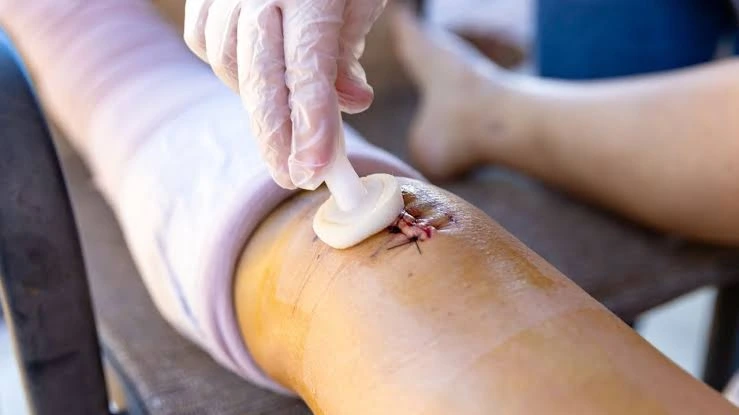
Surgical incisions require careful attention during recovery. Proper wound care lowers your infection risk, and it supports steady healing. When you follow a clear protocol, your incision can close correctly. Your provider can catch problems early before complications develop.
Fundamentals of Incision Monitoring
Monitoring your incision consistently is one of the steps of wound care.
Tracking Daily Changes
Keep a simple log of what you observe each day. Note the size of the wound, the color of surrounding skin, and the amount of drainage. When you track these details consistently, your provider can identify patterns, and they will adjust your care plan before problems progress. Proper dressing changes are a key part of daily care. Always wash your hands before touching the wound area, and use only the materials your provider recommends. When moisture builds under a dressing, bacteria can grow. Changing dressings on schedule reduces that risk and keeps the wound environment clean. Daily monitoring keeps your recovery on track, and you should inspect the incision each day. Note any changes in color, drainage, or odor. Slow-healing wounds are susceptible to infection, so early detection matters, and prompt reporting helps your provider respond quickly.
Recognizing Warning Signs
Watch for warmth, swelling, or increasing pain around the incision, and keep the area clean and dry between dressing changes. When redness spreads or drainage increases, contact your provider immediately. These signs may indicate infection that requires treatment. Some warning signs develop gradually, and others appear quickly. Fever can signal a systemic response to infection, and it warrants a prompt call to your care team. When the wound edges separate or the incision reopens, do not attempt to close it yourself. Your provider needs to assess the tissue directly.
Options for Advanced Recovery
Advanced therapies address wounds that resist conventional treatment, since some complications can arise. HBOT is typically used as part of a broader treatment plan. Your provider determines the number of sessions based on your wound’s response, and they monitor progress throughout the process. When combined with debridement or skin grafting, HBOT can improve outcomes, and it supports faster, more stable closure. Not every wound requires advanced therapy, but some conditions respond poorly to standard care alone. Poor circulation, prior radiation exposure, and certain chronic conditions can limit healing, and HBOT addresses these barriers directly. If your provider recommends this therapy, your wound needs more support than conventional treatment. The goal is to protect your recovery.
Treatments for Nonhealing Surgical Wounds
Some incisions do not close as expected. Nonhealing surgical wounds need specialized care, and delayed treatment raises your risk of infection. When standard healing stalls, your provider evaluates the wound, and they select an approach based on tissue condition and depth.
- Nonhealing wounds are assessed based on tissue condition, blood flow, and infection signs.
- Poor circulation, diabetes, and chronic conditions can delay surgical healing.
- Sharp surgical debridement clears dead tissue to prepare the wound bed for repair.
- Split-thickness skin grafts use healthy donor skin to encourage wound closure.
- Bioengineered skin substitutes provide a scaffold for cell growth when donor skin is not suitable.
Schedule Your Wound Care Appointment
Proper wound care protects your recovery. Timely treatment reduces complications, and it supports steady healing. If you have a surgical incision that does not heal, schedule an appointment online or by phone today. Your team will guide your care.
